
After a short break to finish assignments and enjoy some downtime, the blogs are back! We are jumping right back in with sustainable eyewear. I bought some new glasses a few weeks ago, and whilst my options were limited (I was being fussy), I managed to pick the one pair of glasses which were made with sustainable practices! This blog will outline some brands which strive for sustainability whilst keeping practical and stylish.
Whilst glasses serve a practical function, they become part of people and their personalities. Therefore, it is important to make sure we find glasses that we are comfortable wearing every day without sacrificing earth.
If you are located in Europe, Canada, New Zealand or Australia, Specsavers offer its own brand of glasses made from recycled products: LUXe. While these are £130 per pair, they are part of a buy-one-get-one-free deal and are made from a bio-based acetate. Acetate is a chemical compound derived from acetic acid using fossil fuels. The new version has the same durability and flexibility as conventional acetate but is made from wood pulp and cotton, reducing carbon emissions.
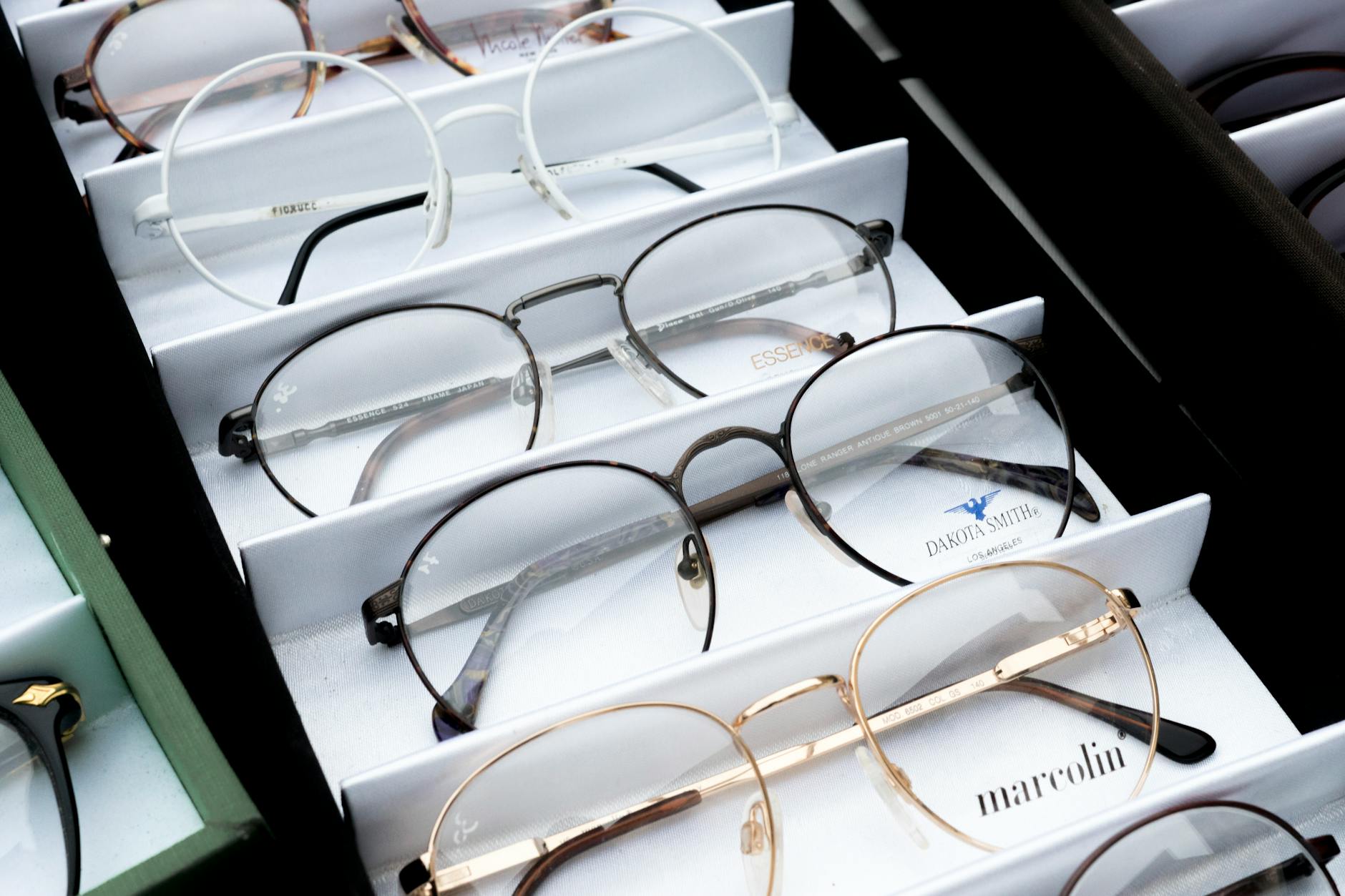
If you want to make a statement, peep is the place for you! They aim to save frames from going into landfill by refurbishing and restoring pre-loved glasses and sunglasses. By sending your vintage glasses or modern frames to peep, you receive a £10 voucher towards your next purchase. Furthermore, all packaging is sustainably sourced and fully compostable, cleaning cloths are recyclable by being made from either 100% recycled PET plastic bottles, and cases are all produced using sustainable cardboard made to be durable. Beyond the product, peep uses green renewable energy, their studio is built from salvaged windows and doors and thrifted furniture. Props and clothing for marketing shoots are all thrifted, aiming to minimise their negative impact.
Eco eyewear offers carbon-negative eyewear, where the efforts in planting trees have meant that these glasses surpass neutrality. Their one frame, one tree program has planted over 3.8 million trees to aid this mission. With a 360-degree sustainability approach, green thinking is woven into every aspect of business, from materials to packaging. Lenses are produced using bio nylon, which is made from natural and renewable materials and is 20% lighter than standard polycarbonate and glass lenses. There is plenty of information on their website regarding the sustainability efforts of each type of eyewear on offer, feel free to check it out here! Finally, eco eyewear offers detachable sunglasses which sit on top of your regular glasses to reduce the amount of materials being used!
Feel free to drop any other suggestions below!

 Not My Monkey