The Current UK Food System
Each product in the supermarket will have a story of its own, however, the UK food system can be simply summarised in the following flow chart.
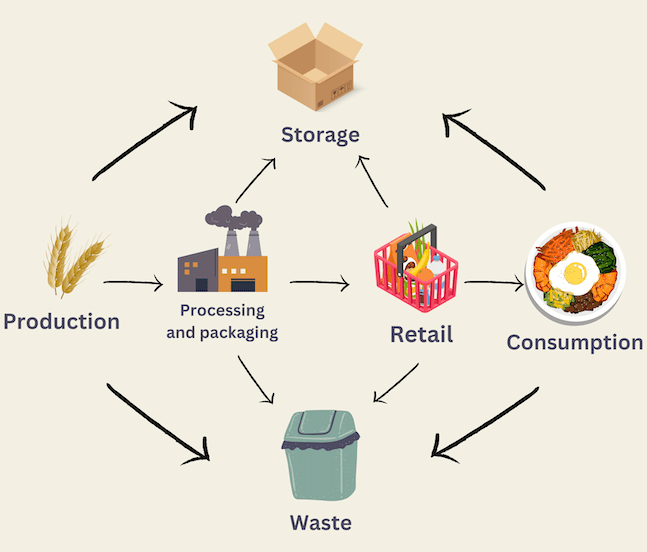
Food systems are considered to be fairly inelastic due to food being a necessity, there will always be demand for food, and whilst there are substitutes for different types of food, food as a whole has no substitutability. There are various drivers which affect different parts of this system, these include:
- Economic: this driver covers topics from the income of individuals and their ability to purchase food to the cost of growing, processing, packaging and distributing such food.
- Social: current trends have a huge impact on food systems as supermarkets are incredibly responsive to consumer demands. For example, the increased interest in plant-based food has caused a surge in the number of plant-based options offered in supermarkets. The example of plant-based foods links heavily to technology.
- Policy: this refers to the government policies in place to provide everyone with access to healthy food. For example, in 2018 a tax on soft drinks with a high sugar content to encourage health consumption by making such drinks less accessible. There are various policies and interventions in place within the UK food system, however, their effectiveness is highly disputed.
- Technology: if we take another look at the plant-based scenario, recent advances in technology have allowed scientists to produce products that mimic conventional proteins, including taste, texture and nutritional value
- Environment: the amount of land available and its fitness for crop growth is a major influencing factor in the UK food system, however, this doesn’t just apply to UK land as we import 40-48% of the food we consume. Therefore the quality of the land in countries such as Germany, France and Ireland is important for our food security.
Health implications of the current UK food system
The health effects of an inadequate food system are primarily experienced by children in the form of dental decay; stumped growth; increased risk of obesity and other chronic illnesses; substance abuse and smoking; and increased likeliness of mental health issues. However, the effects are also often observed in ethnic groups and vulnerable groups. Ethnic minorities are more likely to experience issues surrounding mental health if in a state of food insecurity due to exclusion and racism from seeking aid. Additionally, vulnerable groups, which include young offenders, carers, refugees, and those with mental or physical issues/needs also experience discrimination.
The role of food banks
Food banks offer emergency support to those who cannot afford to purchase food, there are at least 2,871 food banks across the UK. We should not be part of a system that requires food banks, they should not become normalised ways of sourcing essentials. However, like many charities, they aid society where the government has failed them and therefore are an integral part of the current UK food system.
Threats and Opportunities
There are many failings within the UK food system. Brexit has caused barriers to purchasing from many European countries, making food insecurity is bigger risk. Additionally, this reduced access to international food drives the prices of such food up, for example, The London School of Economics have observed a price increase of 10% of imported meat and cheese due to Brexit.
I dread the shop where I need to buy oil as the changes in climate change have made cultivating olive crops challenging, resulting in less oil being produced. The shift in supply increases the price of oil as the equilibrium state between supply and demand changes. These climate shocks cause insecurities in other crops like rice and potatoes.
Third, the food system has become less and less of a priority to policymakers. The economic value-driven ethos adopted by those in policy means that livelihoods are often dismissed as farmers are exploited and forced to produce products which have lower quality for a cheaper price. Furthermore, the cost of maintaining a healthy diet is increasing and benefits do not reflect this increase in price meaning those with a low or no income are forced to consume low nutritional value diets, affecting their health and well-being.
While Brexit has fostered many challenges for the UK, decreasing our reliance on imported food provides the UK with an opportunity to create a completely self-sufficient food system. Yes, this may be ambitious, but working with various stakeholders who represent all forms of life provides an opportunity for transformative change. Additionally, changes in policies to incentivise healthy food consumption through education are also important to reducing health risks in our nation.
 Not My Monkey