Door-to-door ordering services have made grabbing a takeaway unbelievably easy. However, this convenience comes at a cost, not only to our bank acounts due to packaging and delivery costs, but to many others involved (or sometimes not) in the process. This blog discusses the sustainability challenges takeaway culture has created.
Contents: Many fast food chains tend to unethically farm animals to produce high volumes at a low cost. McDonald’s, KFC and Pizza Hut are among those who have been criticised for their lack of animal welfare standards. An example of this includes ‘factory-farmed chickens’, which involves mass farming purely for human consumption. These chickens will never see the outside; are confined to small spaces; forced to have their beaks clipped without anaesthesia, designed to stop them from pecking at each other, which only occurs due to the confined spaces; and forced into genetic manipulation so suppliers can get more for their buck. That’s just chickens, McDonald’s is the world’s largest buyer of beef, and as discussed before, cattle farming is a huge producer of greenhouse gasses. With almost 42,000 McDonald’s restaurants worldwide, a huge footprint is made.
Cooking: Besides deep fried food being unhealthy due to the oil absorbed in the process, fryers are energy intensive to maintain a high oil temperature. Commercial fryers tend to be larger and in continual use, requiring even more energy.
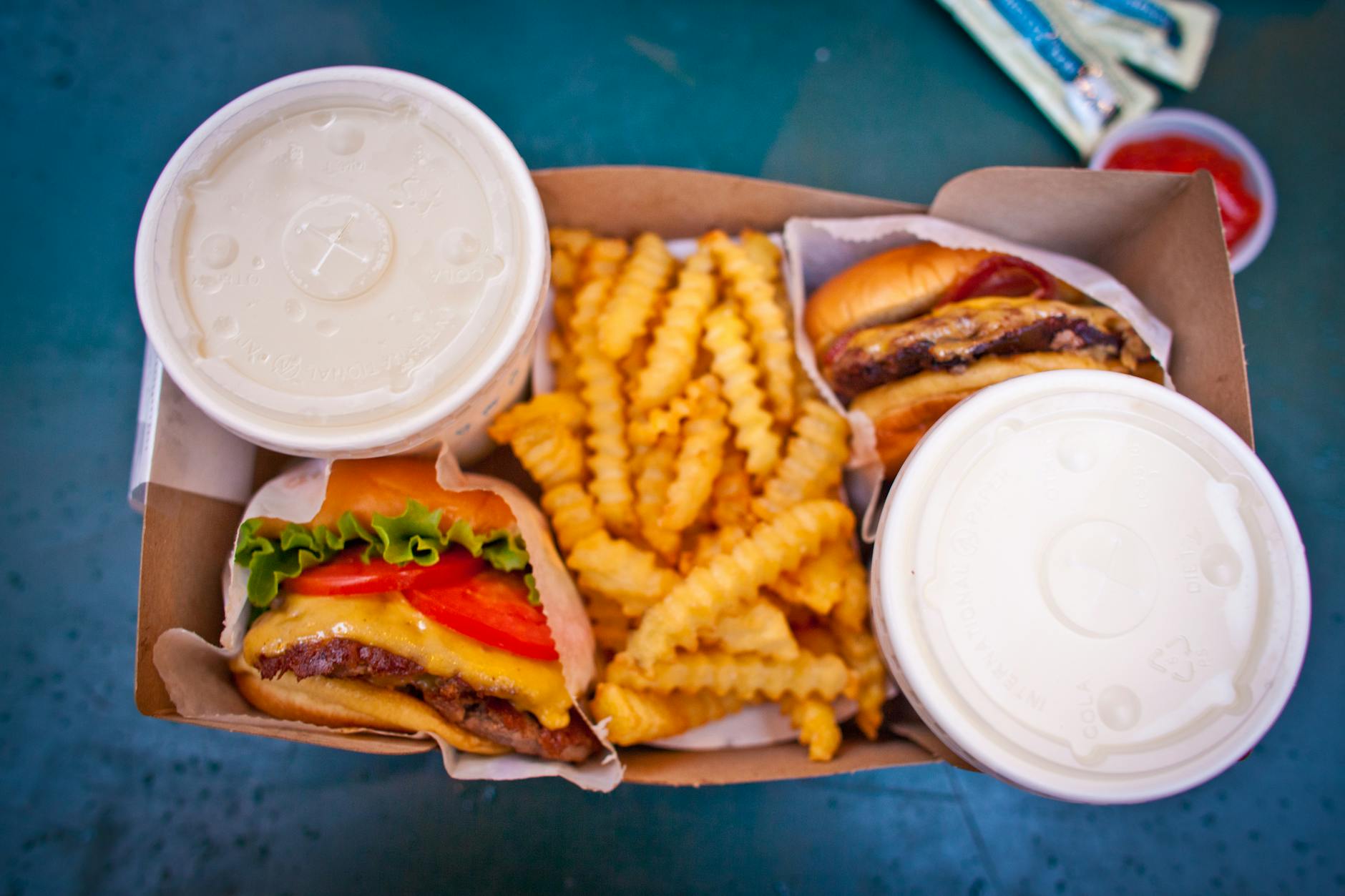
Packaging: Compared to eating in a restaurant, takeaways produce significantly more packaging and, inevitably, waste. Despite many fast food chains in Europe replacing plastic packaging for paper, this does not solve the issue, as a rise in cardboard results in high volumes of deforestation. Furthermore, cardboard is widely recyclable, but rarely will we recycle such packaging as it requires washing, and that defeats the convenience of it, right? A study in 2021 found that fast food chains are accountable for 88% of litter found on coastlines.
Widely sourced ingredients: Following on from unethical farming, takeaway foods are rarely made up of locally sourced ingredients, meaning they have a heavy carbon footprint, are less likely to be fresh and hold a lower nutritional value.
Food waste: We are often unaware of the portion sizes when ordering online, so it can be tempting to over order, especially when hungry! But this results in food being thrown away. In fact, £1.8 billion worth of takeaway food is wasted annually in the UK, the biggest reason being a personal safety concern of reheating food. Usually, homemade food is safe to reheat; the fact we question takeaway food should be a hint that it is not high quality or fresh.
Delivery: Takeaways got their label from the fact that you went to the restaurant, ordered in-store and then took it home. The rise of delivery services has transformed this into door-to-door delivery, with petrol cars and motorbikes among the most used vehicles. On top of this, routes do not tend to be efficient, but rather favour the order in which meals were cooked. While bikes are a popular choice for city centers, they have a limit as to how far they can go before the food spoils.
Chains: Delivery services often favour chain restaurants and, therefore, make it difficult for independent entrepreneurs to compete. Unfortunately, these smaller services often have locally sourced food with unique ways of preparation, which we become unaware of as they are buried by the masses of fast food on offer.
Instead of takeaways, my friends and I create theme nights (the most recent being Greek with a watch party of Mama Mia). We each bring one or two dishes (sweet or savoury) and create our own banquet! This is a great way to try new foods, test out new recipes and spend time with friends. It may not be as convenient, but that’s ok because that’s not where my value lies. I like to choose the healthy option for our planet and I save a few pennies in the meantime!
 Not My Monkey