The aim of sustainable development is to meet the needs of the present without compromising those of future generations, this also refers to societies having acceptable resources and living conditions that do not take away from the planet (see Defining Sustainability).
When discussing sustainability, climate change is often one of the main topics to arise. Whilst this is important, there are other factors which should be considered in order to be truly sustainable. Below I have identified seven main consequences of hundreds of years of unsustainable actions which we should focus on improving.
Poverty: those living without the necessary financial resources, often due to conflict, poor governance, gender or ethnic inequality, exploitation, and domestic violence. Currently, 700 million people live in poverty worldwide, which is more than double the population of America.
Health: our physical and emotional well-being, good health is considered living without injury, disease and pain. Those living in poverty will most often experience poor health due to a lack of financial stability and/or accessibility to adequate health care. Having a restricted income not only means medical treatments cannot be paid for, but a healthy diet cannot be maintained and therefore is likely to lead to malnutrition and long-term health problems.
Education: conveying knowledge and skills is highly important for securing a fulfilling job which has adequate pay. In 2016, 750 million of the global population of adults were illiterate, 2 out of 3 being women, the cause of this is often a lack of access to schooling, especially in Sub-Saharan Africa. Education is a human right giving everyone equal opportunity to explore their potential.
Inequality: the disparity of opportunity, this may take the form of gender, ethnicity, or wealth… to name a few. By reducing opportunities for certain groups of people we are limiting our potential, everyone has their own skillset which can contribute to developing a sustainable planet. No one knows everything, we need to work together to create innovative solutions to everyday issues.
Economics: economic inequality is the distribution of income across a population. Economists like to dispute equality vs. equity, equality means everyone receives the same resources whereas equity refers to individuals/populations receiving different resources based on their needs to reach equality.
This theme also links to promoting policies that encourage productive activities, end forced and child labour, and promote safe working conditions. 1 in 10 children are forced into child labour, half of which are in hazardous conditions severely endangering their health.
Climate change: the most recognised theme of unsustainability refers to the increased atmospheric temperature and number of extreme weather events. Whilst some temperature shifts are natural, humans are increasing the speed at which the change is occurring more than three times as fast. It is believed that the earth will surpass dangerous temperatures within the next 10 years unless we make dramatic, sustainable changes.
Earth preservation: the earth’s resources are limited, so conserving them for future generations is vital for survival, this refers to non-renewable resources such as oil, coal and gold, as well as the natural environment, i.e., forests, water, species, and land. To put this into perspective, it is expected that we will run out of oil in less than 50 years. There may be sources of oil we are unaware of, however, these are economically unavailable and therefore unattainable, on top of oil being a fossil fuel and extremely harmful to the environment. Once our oil reserves have depleted, we will be forced to use alternative, renewable forms of energy for heating, electricity and powering vehicles. The earlier we start this conversion the better.
None of these themes occur in isolation, they often arise in succession. Additionally, many of the above, such as poverty and health, require international collaboration between developed and developing countries. This may be through financial aid, training, donation of equipment or distribution of knowledge. If governments of developed countries were to invest more in international aid to reduce poverty, charities such as Oxfam could focus on tackling climate-related issues rather than basic living conditions, speeding up the process of sustainable development.
The United Nations focuses on international peace, setting 17 Sustainable Development Goals which are designed to tackle the discussed challenges, these are to be achieved by 2030, but as of 2024 none of these goals have been met with progress severely behind schedule. As a result, these targets have been criticised for their lack of measurability, as well as individual countries being responsible for making their own plans for meeting these goals. The lack of structure for achieving these targets means they’re left up to interpretation and in turn misinterpretation, which becomes an excuse for not achieving the goals. Perhaps the goals are too ambitious, or maybe there is not enough responsibility being taken for these developments? Having said that, this is the only international effort in place to overcome the sustainability crisis; therefore, we must work with these targets to achieve a sustainable world.
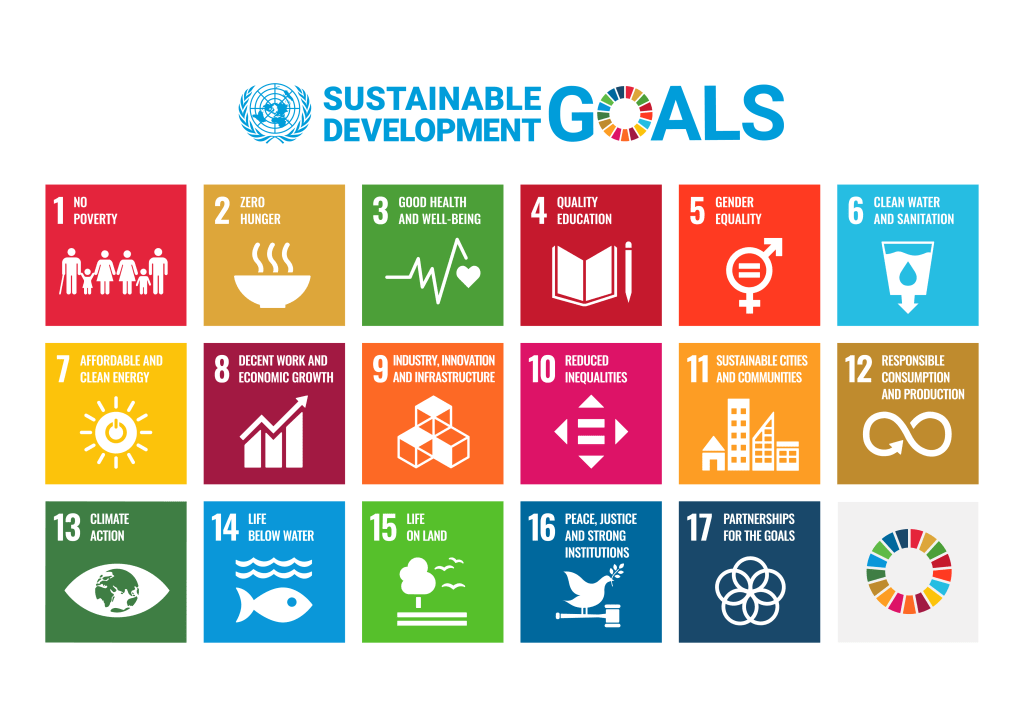
Overall, climate change is just one of many challenges we face as a result of unsustainability. Working towards these goals set by the UN will provide us with the sustainable development needed to survive, however, we need to take more responsibility for our actions and encourage those with the resources, whether that be capital, knowledge or leadership to propel the change we need.
 Not My Monkey