
There are many reasons we clear out our wardrobes, perhaps to make it less cluttered, make getting ready in the morning easier, or simply get rid of items that don’t match our style anymore.
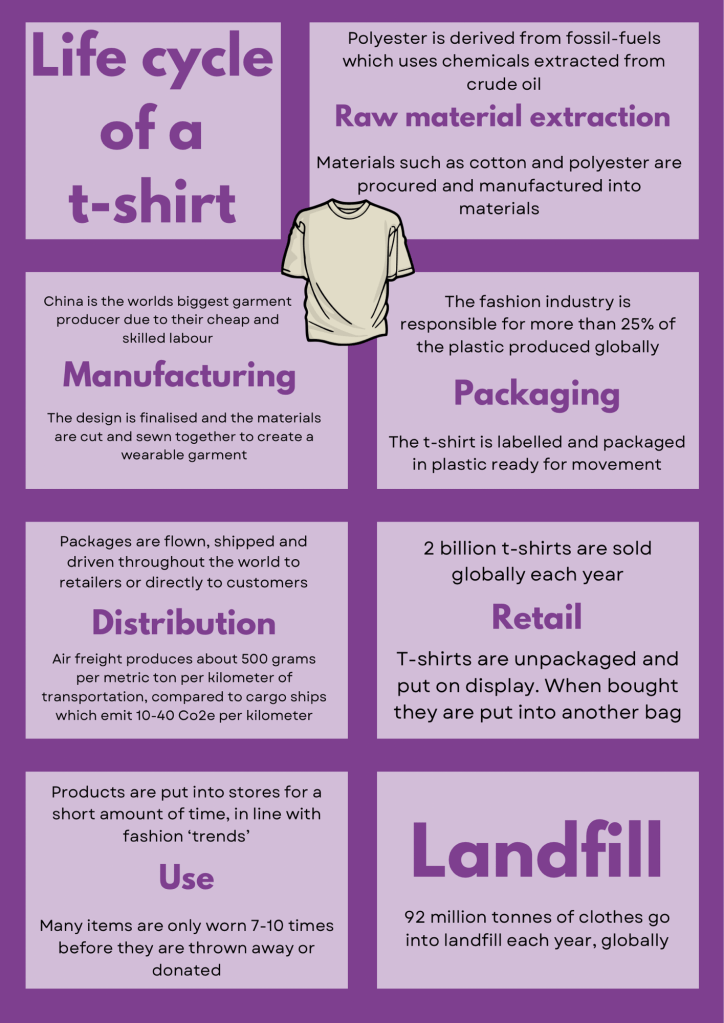
Simply dropping off our unwanted clothing at a charity shop is no longer the most viable option. Only 10-30% of charity donations are sold in the UK, leaving the majority to be exported to textile markets, such as Kantamanto Market in Ghana. This is the world’s largest secondhand clothing market. Used clothing arrives in bales from the Global North (the US and Europe), where traders sort items into high-quality and lower-grade items. Some items are sold in the condition they arrive, some are repaired and then sold, and some are completely unsellable. The percentage being deemed unsellable is rising due to the increased poor quality of fast fashion garments, which prioritise price over quality. As a result, these garments are either burned in landfills, releasing toxic fumes into the environment, or dumped in waterways, causing pollution. Whilst markets such as this one provide work, often for women, and thus support the local economy, they are highly hazardous and cause significant health and safety concerns. For instance, in 2025, Kantamanto Market experienced a fire which left many people injured and 7,000 shops destroyed. Many of these second-hand clothing markets are becoming overwhelmed due to the vast overconsumption of the Global North, increasing the number of garments that are unsellable, showing that these are not sustainable solutions.
Our responsibility doesn’t stop when we toss the items out of our wardrobe; we must make sure we are responsibly rehoming our clothes. Here are some ways we can do this.
Sell
As the cost of living increases, selling clothes is becoming an extremely popular way to get rid of unwanted items. While this is a great practice of sustainability, make sure not to buy items with the intention of being able to sell them after a few wears. This contributes to the fast fashion industry as businesses are encouraged to make cheap garments as demand is still present, even though we receive a monetary benefit from selling them again to make it seem worth it.
Donate
This goes beyond donating clothes to charity shops, which is often the most common and easiest option. You can list items for free on places like Facebook Marketplace and olio, allowing those in need to collect clothes directly. Alternatively, non-profits such as Clothes Aid collect and donate clothes to charities across the UK. This is completely free and easy to use.
Repair
Often, garments are made using lower-quality materials to reduce the end price. While having a lower cost is a relief in an expensive economy, it often comes with hidden downfalls after purchase. Garments are not as robust and are likely to break more quickly, but cheap materials also don’t tend to perform as well in their stated fields. For example, garments made of polyester won’t hold the heat well, leaving you feeling cold in winter. Alternatively, in warmer weather, they are less breathable than alternatives, like cotton, meaning you are more likely to sweat. However, even the most well-made garments will eventually wear out, which is a sign they’ve been well-worn and loved. In this case, it’s important to see if you can repair them. Either get creative and repair it yourself, or send it to a tailor’s workshop/repair shop.
Take-back Serices
This is a great alternative to binning clothes, where take-back services offer a scheme where you can send your unwanted and unsellable clothing and textiles to them to be recycled, these are often made into new materials and fabrics that are used in new clothes, creating a circular cycle. Many clothing brands offer a take-back service; however, it is worth investigating where the clothes go, as many fast-fashion retailers will send items to second-hand traders in places like Kantamanto Market. Choose to use brands with transparency; if there is a lack of information stating where unwanted garments go, it is most likely they are hiding the truth, as it’s not in line with sustainability guidelines. This is a form of greenwashing, and whilst it is not our responsibility to police this, if we are aware, we can support the right businesses and make a real impact.
 Not My Monkey