
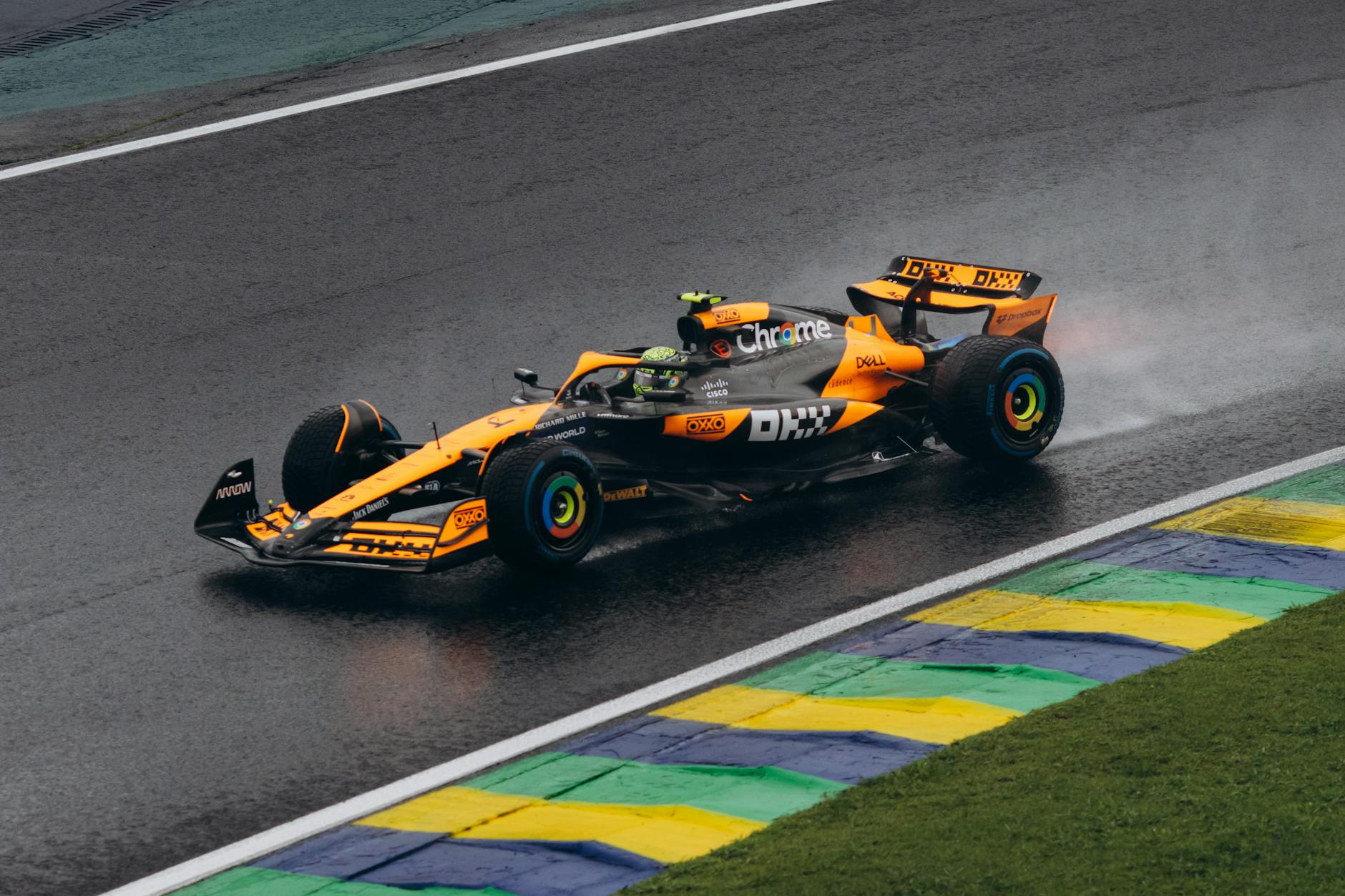
There is a considerable increase in Formula 1 attention fueled by social media and the Netflix docuseries ‘Drive to Survive’. However, there are concerns about the sustainability of the sport; not only do drivers race fuel-burning cars, but they also travel all over the globe to do so. This blog discusses the sustainability strategies in place to reduce the impacts of motorsports whilst allowing athletes to thrive and identifying opportunities for change.
It should be noted that each party of the motor sports industry is accounted for differently, so the carbon footprint of Formula 1 is not the footprint of the whole sport; it’s purely the organisation’s. Each team and track has its own impact, which the Formula 1 brand does not take responsibility for. However, the F1 brand sets the industry standard, enforcing rules and regulations each team must obey.
There are three main areas which F1 aims to improve.
Become net zero by 2030
The carbon footprint of Formula 1 as an organisation reaches 223,031 tonnes of CO2e, with the biggest contributor being logistics (49%). Fuel only contributes 1% to the sports overall carbon footprint, however, it does present the biggest development opportunity. F1 cars have both a petrol tank and a battery; this is purely down to getting the most speed out of the car, but all teams must be using 100% sustainable aviation fuels by 2026. Such fuel will be carbon-neutral and created from non-food bio sources, general waste or carbon extracted from the air. Not only does this provide development opportunities for the 10 individual teams who race in F1 and other leagues, but it also drives development in conventional fuel manufacturing.
One of the biggest grievances I have with Formula 1 (and I’m a huge fan) is the fact that races are not scheduled in a way where travelling is efficient. For instance, there are three different races in America, none of which are back-to-back, meaning teams are flying out three times more than they should have to. There is more to this issue than scheduling, though; many of the drivers and team leaders fly using private jets, which is potentially the worst sustainability move one could make.
Achieve a positive race print
Formula 1 introduced a media and technology centre which welcomes local students for career insights, promoting turning interests into careers. Community engagement is a great way to create strong relationships with local fans and aspiring workers. Which is convenient as fans hold great power in bringing initiatives to life and improving the impact at each race. This could be through reusable water bottles, recycling schemes and choosing low-carbon ways to travel, therefore, engaging fans is a priority for F1 and its race promoters.
Formula 1 also works with a handful of charities, including UNICEF, to improve access to education. This involves a Learning Passport to provide children with access to quality education; this pairs with UNICEF’s response to the humanitarian crisis and helps protect children in emergencies.
Increase diversification on track, in the garage, and at base
As we know, sustainability isn’t just about what we can do for the planet but also what we can do for humans as a society. Formula 1 has introduced F1 ACADEMY, a female league for racing to diversify the opportunities for female motorsport racers. This increases accessibility in a male-dominated sport, giving females an opportunity to display their talent fairly and equitably.
Another avenue of diversity Formula 1 has launched is engineering scholarships for underrepresented groups, giving talented individuals a pathway to succeed in a financially driven industry. This also aims to increase STEM-based hands-on learning through race weekend activities.
Formula 1 has an opportunity to make sustainability a core component of the industry. Enforcing ESG or sustainability rules as they would any other rule makes these actions ‘normal’ rather than boxes to tick. For example, if a team releases a car from the pit lane in an unsafe manner, they can be reprimanded financially. This promotes the importance of health and safety as teams are likely to stick to this as every dollar counts. If F1 were to introduce the same penalities for not taking sustainability action, teams are likely to comply. Furthermore, there is vast potential for change beyond the motorsport industry to the transport industry as a whole, whether that be recycling carbon to contribute to creating a circular car (not literally circular!) or using biofuel.
There is heaps of information regarding each driver, team and hosts’ efforts to reduce their negative impact – one of my favourites is McLaren Racing’s engagement in circular economies and embracing these initiatives to improve their performance. Let me know if you’d like to hear more on this topic!
 Not My Monkey
Leave a comment