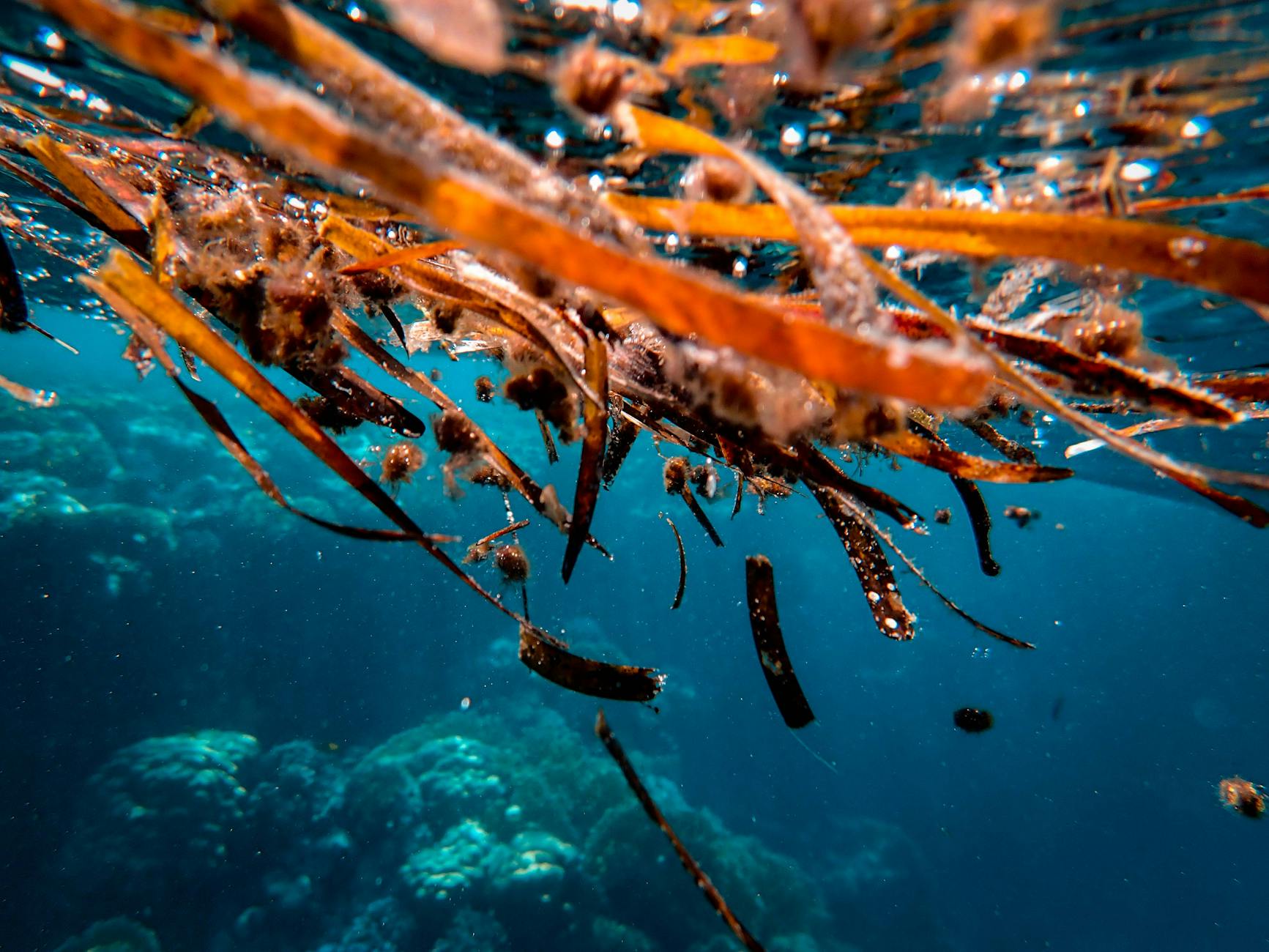
Seaweed is vital to our Earth, here’s why…
Habitat Creation: Seaweed can provide habitats for a large range of marine life, for example, kelp forests provide sea otters with a source of food, protection and a place to rest. Sea otters are considered an endangered species due to oil spills, the fur trade and fishing, any further disruptions can be detrimental
Carbon Sink: The ocean absorbs 30% of the carbon dioxide released into the atmosphere, so the more we emit as humans, the more burden the ocean carries. Fortunately, seaweed acts as a carbon sink within oceans, absorbing carbon dioxide and replacing it with oxygen
Nutrient Filter: Seaweed plays a vital role in removing excess nutrients from the water, preventing harmful algae blooms which prevent oxygen from reaching other forms of sea life, severly disrupting the eco-system
Food Value: Not only do humans consume seaweed, but it is the primary source of nutrients for various sea life, such as sea lions, turtles and crabs. It contains many essential minerals like iodine, iron, calcium and magnesium, whilst being low in calories.
Plastic Ability: Seaweed can even be made into biodegradable plastic by harvesting and drying to create a powder, which is mixed with starch to create a thick, viscous gel ready for moulding. However, there are various steps which must be taken to make sure the extraction of seaweed is safe for marine life, including making sure there is still enough for ecosystems to thrive.
With ocean temperatures rising, it is becoming increasingly difficult for seaweed to survive, as their cells become damaged as a result of warmer temperatures and, therefore, less likely to withstand ocean movements. Additionally, the acidification from carbon dioxide in the water makes it harder for seaweed to grow and photosynthesise. Without seaweed, ecosystems will deteriorate and our Earth will continue to suffer.
 Not My Monkey
Leave a comment