
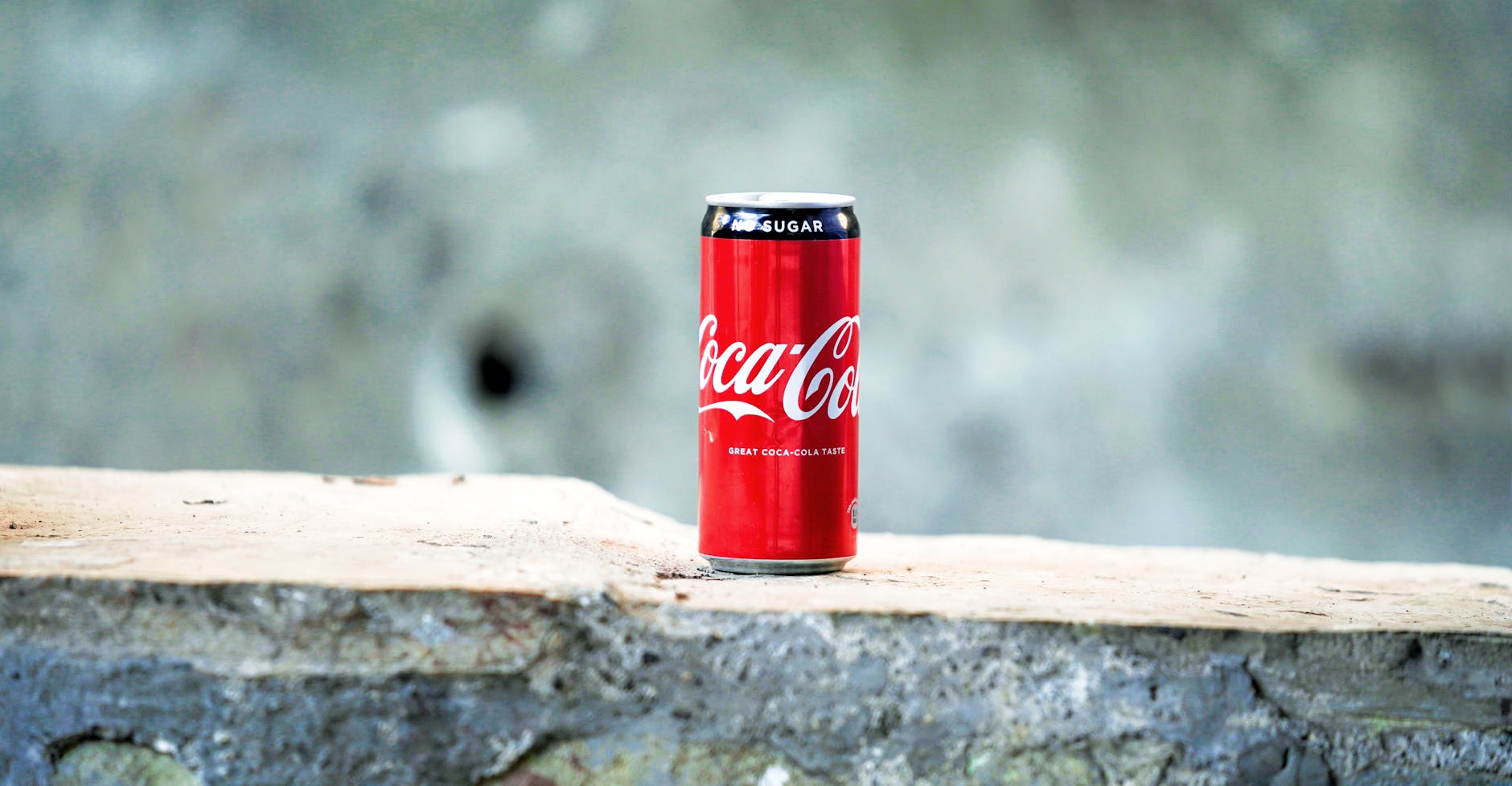
Coca-Cola is one of many multi-national corporations that have delayed its sustainability goals from 2025 to 2035. The environmental goals specifically are part of a global commitment by the Ellen MacArthur Foundation to create a circular economy for plastics. These goals were set to help businesses, NGOs, governments and investors engage in meaningful progress in reducing plastic waste because, as we know, plastics are made to last, but we do not use them with the same mindset. As a result, they end up in landfills, water sources, animal habitats and more, creating detrimental effects on the Earth and its systems.
Below is a list of the 2025/30 and re-evaluated goals
Prior goals:
- Make 100% of its packaging recyclable globally by 2025
- Use at least 50% recycled material in its packaging by 2030
- Reduce the use of virgin plastic derived from non-renewable resources by 3 million metric tons by 2025
Re-evaulated goals:
- Aim to use 35-40% recycled materials in primary packaging, this includes increasing recycled plastic use globally to 30-35%
- Aim to help ensure the collection of 70% to 75% of the equivalent number of bottles and cans we introduce into the market annually by 2035
- Seek to return 100% of the total water used in each of our more than 200 high-risk locations* across the Coca‑Cola system by 2035
- We set a target to reduce our Scope 1, 2 and 3 emissions in line with a 1.5°C trajectory by 2035
There has been much speculation regarding the sustainability of Coca-Cola, notably not being able to stick to its commitments, hence the goal re-evaluation. However, I have a few issues regarding its approach to sustainability as a whole. First, their website has an impact section, and within this section, there is a ‘Sustainability’ and a ‘Social’ page. This confuses me as sustainability includes social and environmental considerations alongside economic ones, so why are they separated? To me, this suggests they do not have a sound understanding of what sustainability is and the interconnectedness of social, environmental and economic aspects, and therefore, I struggle to understand how they can measure and effectively engage in their goals if they fail to understand the very meaning of them.
Second, whilst their environmental goals have measurable targets and timelines, their social goals do not offer the same trajectory, they are vague and can be interpreted in many ways. For example, they state, “We’re strong advocates for the LGBTQ+ community here at Coca‑Cola Great Britain”, but what does this mean? Well, aside from raising awareness for their products, it’s not actually clear what the benefits of their actions within the LGBTQ+ space are. Furthermore, these goals differ from country to country for Coca-Cola to provide minimal effort in tackling environmental and social issues.
Finally, large corporations, such as Coca-Cola, have the influence and power to be able to make an impactful change for the better in society and the environment, yet every time, they let us down and choose themselves. They place their value on profit rather than people, and it shows. For example, Coca-Cola has been challenged on their employee wages and working conditions in certain countries where the laws fail to protect citizens. We should not be in a position where we have to influence elites and leaders to do good, but unfortunately, that is what it has come to, so we should use our power and think twice about purchasing from retailers like Coca-Cola who have an agenda that benefits the few with an effect on many.
 Not My Monkey
Leave a comment